Looking to own a fried chicken franchise?
Book your store now and take advantage of a limited-time promotion offering a free cloud kitchen brand. Act fast and secure your own fried chicken franchise today!"
GET FRANCHISE
Welcome to HFC
WELCOME TO HFC
Chicken buying everyday from local market.
After inspecting every pieces marinating with special spices, then hand breaded .
Frying at 170°c to get perfect taste.

About Us
ABOUT HFC
Hot fried chicken are one of the trendiest western food brands in India. Started off in Bangalore.
It serves a wide variety of Fried Chicken, Chicken Wings, Chicken Hot Wings, Pizza, Burgers, Lollipops.
OUR VISION
In India and overseas, our brand's primary vision is to become the leading western food destination in the world by offering world-class food and establishing these miniature amazing-looking units.
OUR MISSION
Fried wings is our mission to provide the
best food, service, and ambiance for life's special moments
OUR VALUES
We strive to provide our customers with fresh and tasty food as well as a fun-filled dining experience.
Providing guests with a safe, clean, and enjoyable environment
EAT HEALTHY, EAT FRESH
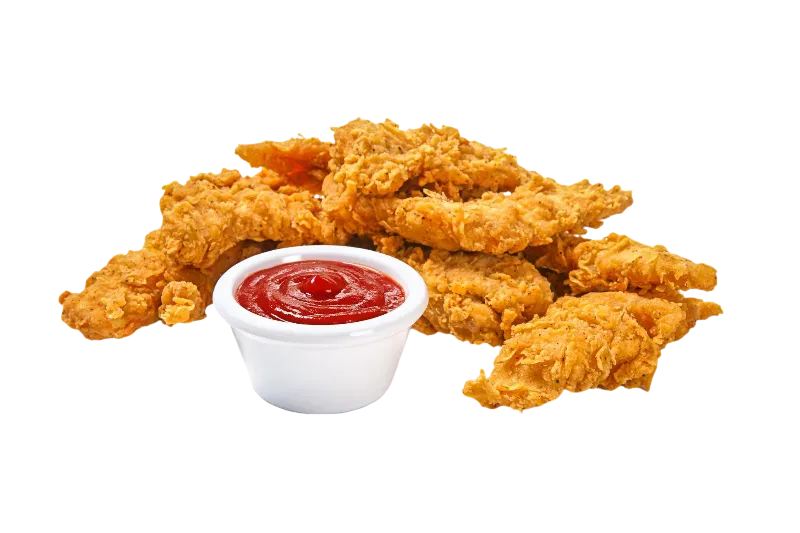
India's hot fried chicken offers the freshest food. Our oil-free food is prepared with chicken that comes from only select vendors. Prior to accepting any batch of chicken, we perform stringent quality checks. As a result, Hot Fried Chicken India's food items are of the highest quality, offering the best nutrition.
There is no better food than hot fried chicken India. Our oil-free food is prepared with chicken procured from only select vendors. Before accepting any batch of chicken, we conduct stringent quality checks. All food items that Hot fried chicken India serves to you are of the highest quality, providing the highest level of nutrition.
Hot fried chicken
HFC
Chicken That Is 100% Real
Fresh chicken from the local market, no frozen chicken. Chicken fried in hot oil

Inspection
Each piece of chicken is inspected before marinating. Fried chicken oil that's hot

The Oil Used Is 100% Fresh
When frying, do not add Ajinomoto

Cooking To Perfection
Hands-on techniques, special spices, perfect blends. Distancing yourself from others

Distancing Hygiene In The Workplace
Maintain 100% hygienic conditions when cooking, cleaning machines, & encouraging social distance

Easy On The Pocketbook Pocket Friendly
For the common man, our prices are pocket-friendly
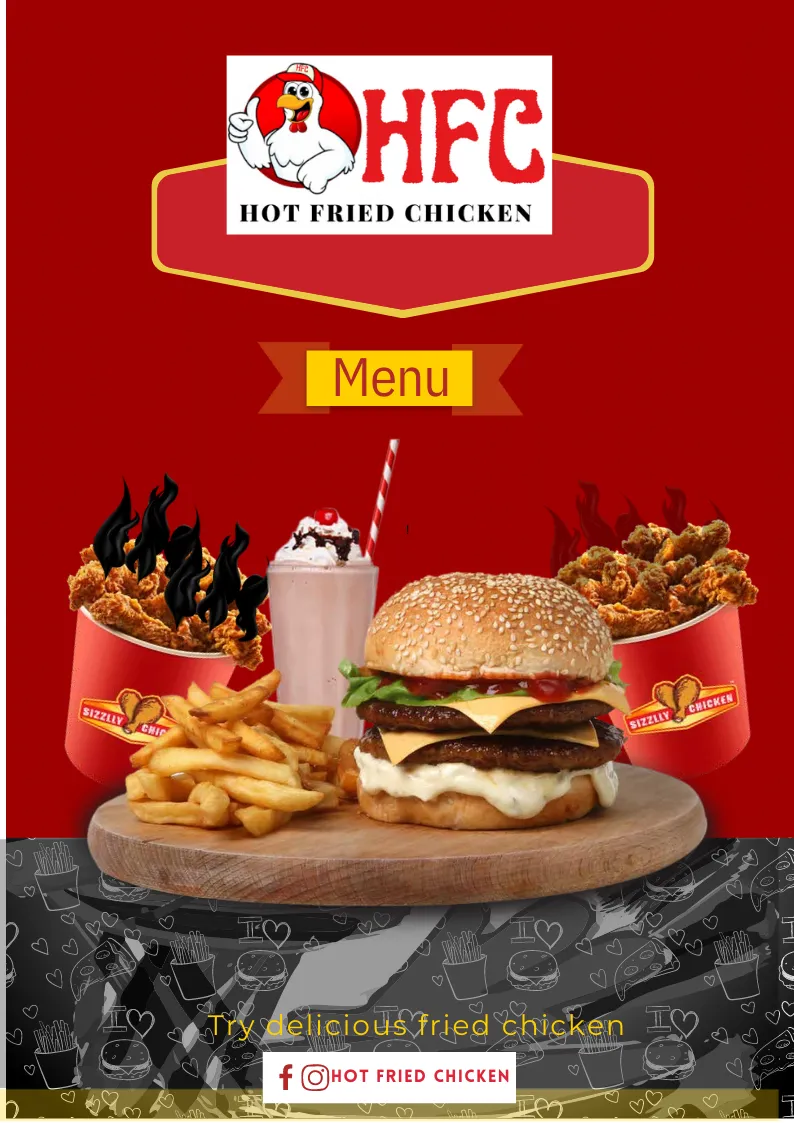
MENU
MENU
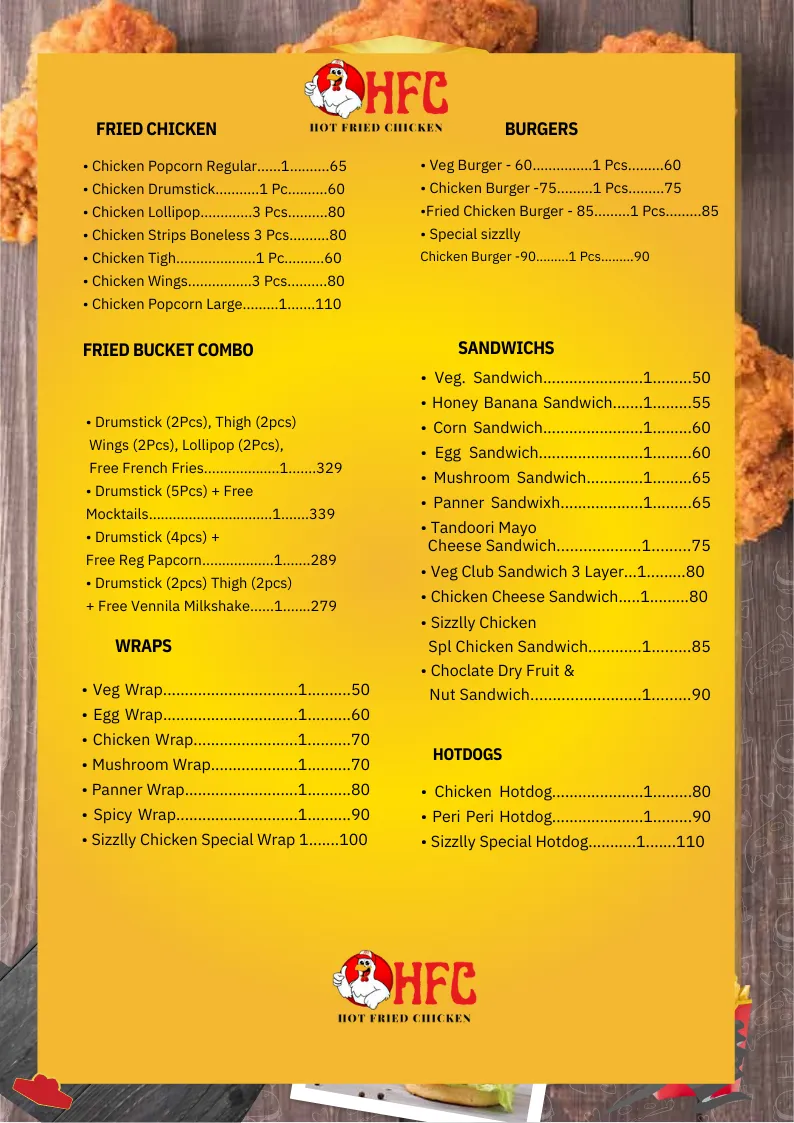
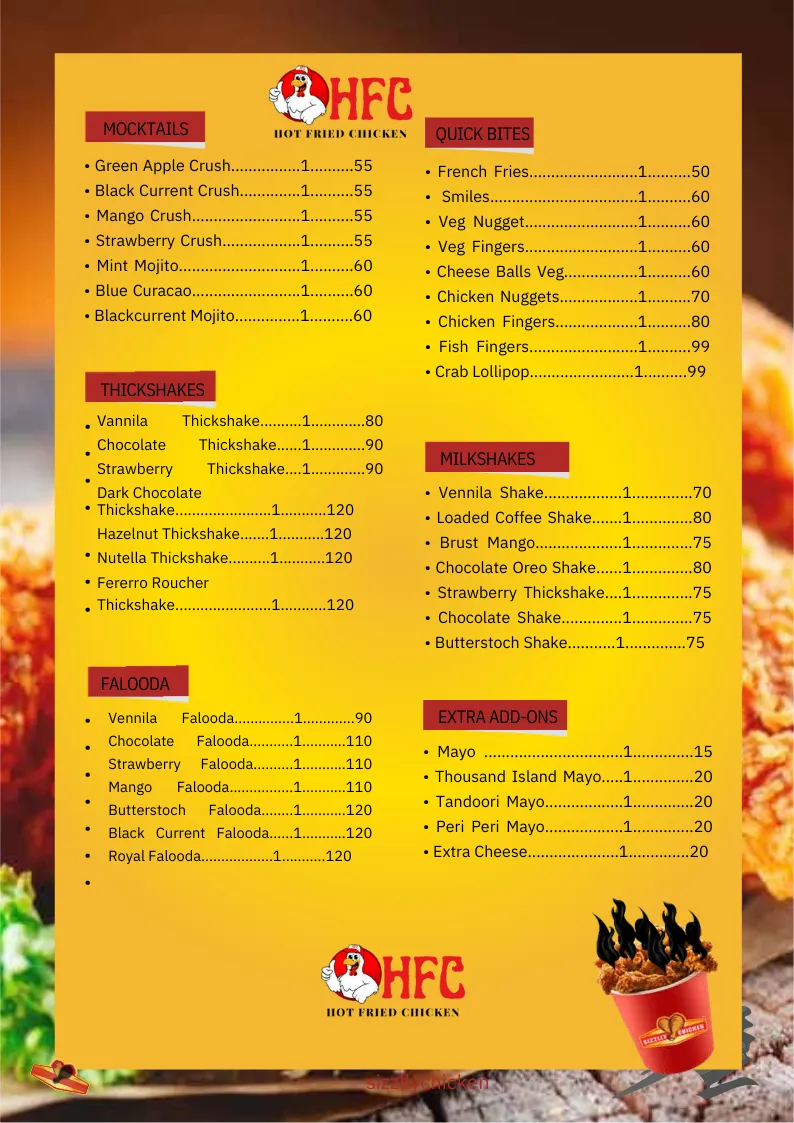
We are proud
to serving for you
Gallery
FAQ's
What sets Hot Fried Chicken apart from other franchises?
At Hot Fried Chicken, we take quality, taste, and store ambiance very seriously. Our corporate chefs carefully craft every ingredient using delicious and handpicked herbs and spices. This attention to detail makes our stores truly unique.
Are the meats used at Hot Fried Chicken processed?
No, we do not use processed meats in our recipes. We handpick fresh meats from the butcher house on a daily basis.
How can entrepreneurs learn more about Hot Fried Chicken's franchise program?
Entrepreneurs can reach out to us by filling out the form on the Hot Fried Chicken website. Once we receive the inquiry, our executives will reach out to the customer to provide detailed onboarding procedures.
What options do franchisees have for owning their own Hot Fried Chicken outlet?
Hot Fried Chicken offers three franchise variants: Gold, Platinum, and Diamond. Our business experts will explain the details of each variant over the phone.
What is the minimum space required to operate a Hot Fried Chicken franchise store?
The minimum requirement to operate a Hot Fried Chicken franchise store is 150 square feet. However, store size can be scaled up based on local market demand.
Is experience in the restaurant industry required to manage a Hot Fried Chicken franchise store?
No, experience in the restaurant industry is not necessary to run a Hot Fried Chicken franchise store. Our unique POS (billing) and inventory software make store operations and maintenance easy.
What kind of support and training does Hot Fried Chicken provide to franchisees?
Hot Fried Chicken provides end-to-end support, including store location selection, interior and exterior design, kitchen training, store opening promotions, 360-degree brand promotion, day-to-day operation training, inventory management, and maintenance. Additionally, franchisees receive 365 days of after-sales support.
Testimonials
People Love Us
"I've tried a lot of fried chicken in my life, but Hot Fried Chicken's recipe is hands down the best. The combination of handpicked herbs and spices creates a flavor explosion in every bite. Plus, the meat is always fresh and juicy, never dry or greasy. I can't get enough!"
Zahra Butt

"I'm not typically a fan of fast food, but Hot Fried Chicken is a game-changer. The quality of the food is evident from the first bite. It's clear that Hot Fried Chicken takes the time to use fresh, high-quality ingredients and craft them with care. I feel good about feeding this to my family, and they love it too!"
Vishnu
I'm a foodie, and I'm always on the hunt for the next great dish. Hot Fried Chicken exceeded my expectations in every way. The breading is perfectly crispy and the meat is tender and flavorful. I love that Hot Fried Chicken offers a range of spice levels, so I can customize my order to my taste. This is hands down the best fried chicken I've ever had."
Priya
BLOGS
BLOGS
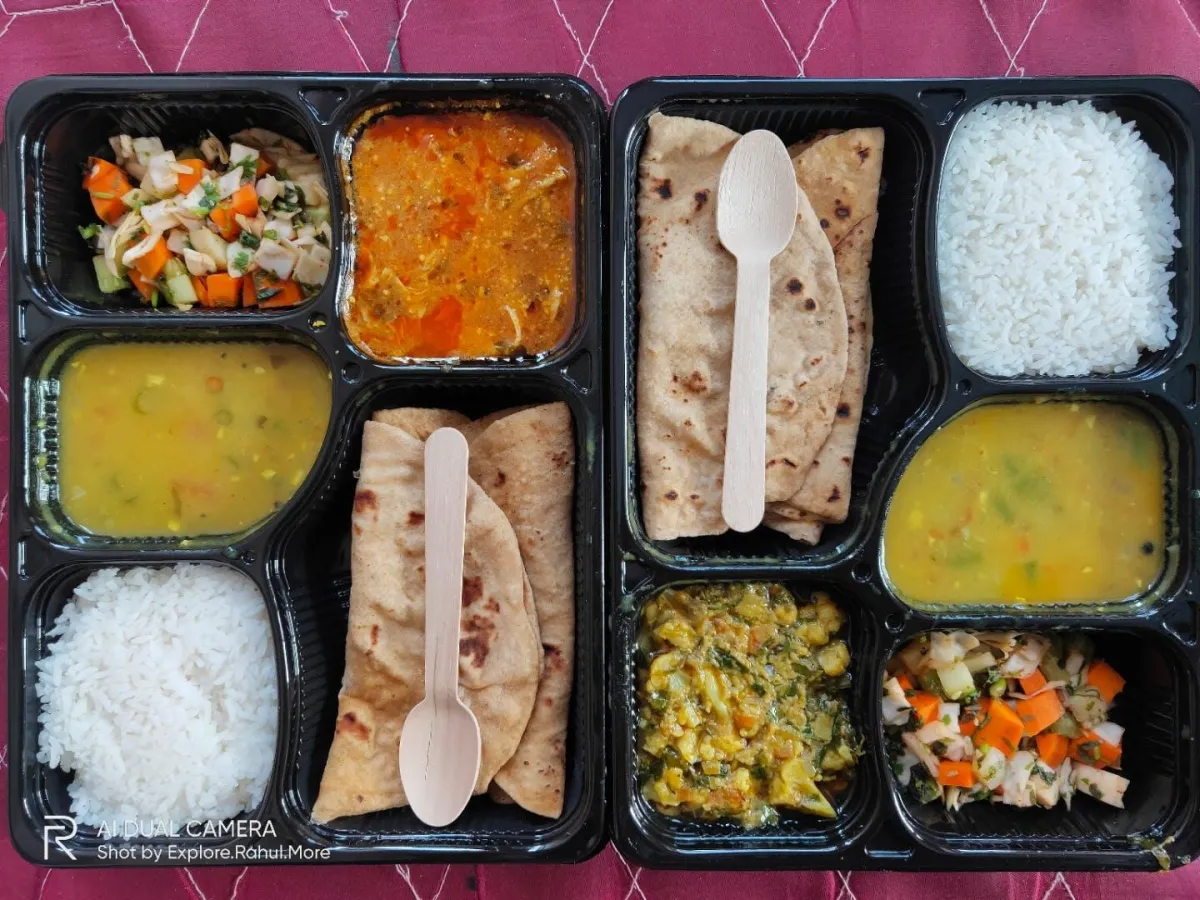
The Cloud Kitchen Revolution Transforming India's Food Industry
The Cloud Kitchen Revolution Transforming India's Food Industry

Introduction to Cloud Kitchens and Their Role in the Food Industry
Have you recently ordered food online and wondered where your meal was prepared? You could have been dining from a cloud kitchen. Cloud kitchens, also known as ghost kitchens or dark kitchens, are commercial cooking spaces set up to prepare food solely for delivery. They don't have dine-in spaces, focusing instead on fulfilling online orders efficiently.
The rise of cloud kitchens is reshaping the food industry, particularly in India, where the blend of technology and culinary innovation is creating new opportunities. This blog post dives into the technological surge in India's food sector, the advantages and challenges of cloud kitchens, their impact on traditional restaurant models, and what the future holds for this revolutionary concept.
The Technological Surge in India's Food Sector
India's food industry is experiencing a significant technological transformation. Advanced AI algorithms, big data analytics, and IoT devices are becoming integral to operations, optimizing efficiency, and enhancing customer experience. The cloud kitchen market in India is projected to reach $2.1 billion by 2024, growing at a CAGR of 16% from 2019 (Research and Markets).
Food delivery platforms like Zomato and Swiggy are leveraging these technologies to streamline operations. For instance, AI-driven route optimization ensures faster deliveries, while data analytics helps in understanding consumer preferences. This integration is crucial as the food delivery segment in India reached a value of $9.4 billion in 2020, with an estimated 3.4 million orders per day (RedSeer Consulting).
Advantages of Cloud Kitchens for Restaurant Owners and Consumers
Cloud kitchens offer numerous benefits that make them an appealing option for both restaurant owners and consumers.
Reduced Operational Costs
Operating a cloud kitchen is significantly cheaper than maintaining a traditional dine-in restaurant. With no need for expensive real estate in prime locations, cloud kitchens can be set up in less costly areas. This model has shown a 30-35% reduction in operational costs compared to traditional restaurants, with a 20-25% increase in pre-tax profit.
Flexibility and Scalability
Cloud kitchens provide unparalleled flexibility and scalability. Restaurant owners can experiment with new menus and concepts without the risks associated with a full-scale restaurant launch. This agility allows them to adapt quickly to market trends and consumer demands.
Enhanced Consumer Convenience
For consumers, cloud kitchens offer the convenience of having a wide variety of cuisines delivered to their doorstep. With detailed tasting notes included with each shipment, customers can enjoy a curated dining experience from the comfort of their homes. 70% of orders on food delivery platforms are from people aged 18-34, indicating a strong preference among the younger demographic for online food services (Economic Times).
Challenges and Solutions in Implementing Cloud Kitchens
While the cloud kitchen model presents significant advantages, it also comes with its own set of challenges. Addressing these effectively is key to leveraging the full potential of this innovative approach.
Technological Infrastructure
Implementing advanced technology can be costly and complex. However, investing in robust order management systems, AI-driven analytics, and IoT devices for kitchen management can streamline operations and enhance efficiency.
Market Competition
The cloud kitchen space is becoming increasingly competitive. To stand out, businesses must focus on quality, unique offerings, and exceptional customer service. Collaborating with food delivery platforms can also provide a competitive edge.
Regulatory Compliance
Navigating regulatory requirements can be challenging. Ensuring compliance with health, safety, and food quality standards is crucial. Regular audits and adherence to best practices can mitigate risks and build consumer trust.
The Impact of Cloud Kitchens on Traditional Restaurants and the Food Delivery Market
The advent of cloud kitchens is significantly impacting traditional restaurant models and the broader food delivery market.
Disruption of Traditional Dining
Traditional restaurants are feeling the pressure from the increasing popularity of cloud kitchens. Nearly 40% of restaurants in India have shifted to cloud kitchens to sustain their operations post-lockdown (NRAI). This shift is driven by the need to adapt to changing consumer preferences and the operational efficiencies offered by the cloud kitchen model.
Growth of the Food Delivery Market
The rise of cloud kitchens is propelling the growth of the food delivery market. With optimized operations and a focus on delivery, cloud kitchens are enhancing the reliability and speed of food delivery services, contributing to the sector's rapid expansion.
Consumer Behavior Shift
Consumer behavior is shifting towards convenience and variety. The ability to order from multiple cloud kitchen brands through a single platform is appealing to consumers, driving higher order volumes and repeat business.
Case Studies of Successful Cloud Kitchen Ventures in India
Several cloud kitchen ventures in India have successfully leveraged this model to achieve significant growth and market presence. Let's explore some notable examples.
Behrouz Biryani
Behrouz Biryani has redefined the biryani segment in India. Leveraging cloud kitchens, they offer high-quality, affordable biryanis across the country. Their success highlights the potential for niche cuisine delivery using the cloud kitchen model.
Rebel Foods
Formerly known as Faasos, Rebel Foods operates over 300 cloud kitchens across 16 Indian cities, managing a diverse portfolio of food brands. Their scalability and brand diversity showcase the immense potential and flexibility of cloud kitchens.
Box8
Box8 specializes in Indian and international fusion food. Transitioning to a cloud kitchen model has allowed them to streamline operations and improve customer experience through technology and data analytics. Their journey emphasizes the importance of innovation and efficiency.
FreshMenu
FreshMenu was an early adopter of cloud kitchens in India. Focusing on chef-prepared, gourmet meals delivered to customers' doors, FreshMenu's success story demonstrates the importance of menu innovation and operational efficiency.
The Future of Cloud Kitchens and Predictions for the Industry
The future of cloud kitchens looks promising, with several trends and advancements on the horizon.
Technological Advancements
Continued advancements in AI, machine learning, and IoT are expected to further optimize cloud kitchen operations. Predictive analytics will enhance demand forecasting, while automation will improve efficiency and reduce costs.
Expansion of Virtual Brands
The concept of virtual brands, created solely for delivery, will gain traction. These brands can be quickly launched and tested using the cloud kitchen model, allowing for rapid adaptation to consumer preferences.
Global Market Penetration
Cloud kitchens are set to expand beyond urban centers, reaching smaller towns and rural areas. This expansion will democratize access to diverse cuisines and create new market opportunities.
Strategies for Digital Marketers and Restaurant Owners to Leverage Cloud Kitchens
To capitalize on the cloud kitchen trend, digital marketers and restaurant owners can implement several strategic approaches.
Data-Driven Marketing
Leveraging data analytics can help identify consumer preferences and tailor marketing campaigns accordingly. Personalized marketing efforts can drive higher engagement and conversions.
Partnerships and Collaborations
Collaborating with food delivery platforms and other brands can enhance visibility and reach. Joint promotions and co-branded campaigns can attract a wider audience and build brand loyalty.
Focus on Quality and Innovation
Consistently delivering high-quality food and innovating menus can set cloud kitchens apart from competitors. Continuous improvement and responsiveness to consumer feedback are crucial for long-term success.
Conclusion
The cloud kitchen revolution is transforming India's food industry, offering unprecedented opportunities and efficiencies. By understanding the advantages, addressing challenges, and leveraging strategic approaches, restaurant owners and digital marketers can ride the wave of this technological surge.
The ongoing evolution of the food industry is a testament to the power of innovation and adaptability. Stay ahead of the curve by exploring the potential of cloud kitchens and integrating them into your business strategy. For more insights and personalized guidance, consider joining our community of food tech enthusiasts and industry experts.
In a rapidly changing landscape, those who embrace innovation will thrive. Ready to take the next step? Sign up for our newsletter to stay updated on the latest trends and strategies in the food industry.

Email: info@eatz.store.com
Address
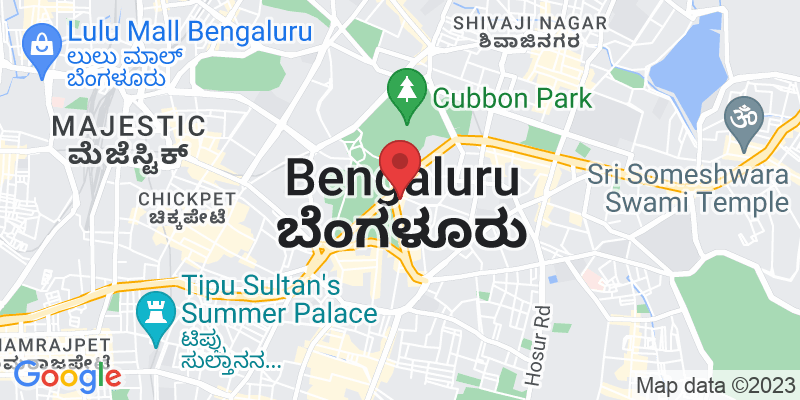
Office: Rajajinagar, Bengaluru
Call : 7019 66 7171